

Fleet Academy: Free Resources for EV Fleet Management
Fleet Academy: Free Resources for EV Fleet Management Sierra Business Council can help support an EV fleet transition in a few ways. For example, we
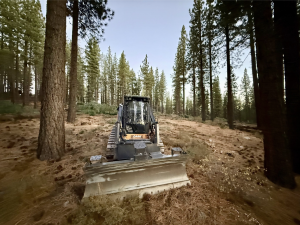
Wood Utilization Initiative
Sierra Business Council’s Wood Utilization Initiative is working to strengthen forest resilience and create new economic opportunities by expanding the productive use of woody biomass and underutilized wood across the Sierra Nevada.
Through regional collaboration, project planning, and technical assistance, the initiative helps communities identify and advance local infrastructure projects that can transform wood from forest management activities into valuable products, renewable energy, and economic opportunity.
Our goal is to build a more resilient regional wood economy—one that reduces transportation costs, keeps more economic value in Sierra communities, and supports long-term forest health.

October 2026 Update: Government Affairs
With the conclusion of the 2025-26 legislative session in September, SBC’s focus has shifted from advocating for Sierra Nevada bill and budget priorities to preparing for the 2027 session. As part of this work, SBC has been convening with partners to reflect on lessons learned from the legislative year and discuss regional priorities for the upcoming session at events across the state, including:
The Outdoors for All Field Convening in Plumas County to learn more about Outdoors for All in the region, weigh in on state initiatives, and connect with regional partners.
The Nature-Based Solutions Forests and Mountain Meadows Summit in Tahoe City, hosted by California Natural Resources Agency, Sierra Nevada Conservancy, California Tahoe Conservancy, and The Nature Conservancy. SBC Director of Government and Community Affairs Emily Blackmer moderated a panel discussion on Innovative Finance for Nature-Based Solutions.
The Sierra to California All Lands Enhancement (SCALE) conference, hosted by Sierra Institute, where Emily spoke on the panel State Leadership in Action: California Natural Resource Policy and Collaborative Landscape Stewardship.
The California Wildfire & Forest Resilience Task Force North Coast Regional Meeting to hear quarterly updates on the Task Force’s work and connect with partners.
The Nevada County Sustainability Summit: Rural Prosperity in a Changing Climate to learn about climate action in the area.
The California Economic Summit, where SBC president Steve Frisch spoke at two sessions: The Bioeconomy: A Possible Win-Win-Win for California and Wildfire Resilience: A Strategic Action Plan for the Next Administration.
SBC has also been closely monitoring the November midterm elections and what decisions on the ballot will mean for the Sierra Nevada. Read more here to learn our perspective on several ballot measures with implications for housing, local government capacity, environmental review, climate resilience, and the ability of Sierra communities to shape their own future.

PG&E Customer or Energy Professional? You’re Eligible to Use the Tool Library
PG&E Customer or Energy Professional? You’re Eligible to Use the Tool Library Some building and energy projects require tools to detect niche measures such as


Future California Building Performance Standards for Public Agencies, and How SNEW Can Help!
Two SNEW services that are often requested by Sierra Nevada public agencies are energy benchmarking (sometimes including AB 802 reporting for buildings over 50,000 square

2026 Legislative Session: What It Means for Wildfire & Climate Resilience
California’s 2026-27 legislative session wrapped up September 1 after a turbulent final week of negotiations over wildfire policy, funding, and the state budget. While a last-minute proposal on wildfire liability ultimately stalled, the Legislature did restore and increase funding for climate resilience through Proposition 4 and the Greenhouse Gas Reduction Fund (GGRF)—a meaningful outcome for Sierra communities amid a challenging state budget year.
The final plan includes $329.5 million for wildfire and forest resilience through Prop 4 and $118 million for wildfire prevention through GGRF. While these investments are an improvement over the June budget, wildfire resilience funding remains near historic lows, with no clear plan for sustained investment in future years.
Read more about the final budget, Prop 4 and GGRF allocations, and what’s next for wildfire and climate resilience in the Sierra.
Prop 45 – Oppose
Prop. 45 would make significant changes to California’s environmental review and permitting processes for certain projects.
SBC supports thoughtful efforts to streamline permitting for projects that address urgent needs, including housing and wildfire resilience. However, we believe the changes proposed by Prop. 45 are too broad and could reduce important environmental protections, public participation, and local decision-making while placing additional demands on already-limited local government capacity.

Prop 43 – Oppose
Prop. 43 would change the voting requirements for certain local special tax measures and prohibit local governments from levying certain ad valorem property taxes.
SBC opposes the measure because local governments need the ability to identify and fund solutions that reflect the needs of their communities. In the Sierra, where communities face significant challenges related to wildfire, emergency services, housing, infrastructure, and other essential services, local funding capacity is particularly important.

Prop 37 – Support
Prop. 37 would establish a state program to provide financing assistance to eligible Californians purchasing newly constructed homes.
SBC supports efforts to expand homeownership opportunities for working and middle-income households, particularly as housing costs continue to make homeownership difficult across California and in Sierra communities.
Prop 1 – Support
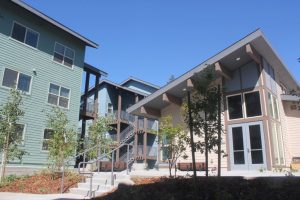
Prop. 1 would authorize $11.25 billion in general obligation bonds to support affordable housing, homeownership, and housing programs serving Californians including veterans, seniors, farmworkers, Tribal communities, and other households facing barriers to housing.
For the Sierra, continued state investment is particularly important as communities face high housing costs, limited developable land, wildfire risk, rising insurance costs, and the challenges of building and preserving housing in rural and mountain communities.
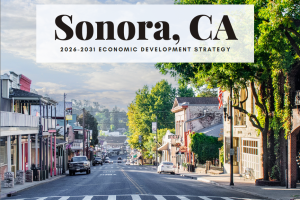
Sonora Strategy Leverages Sierra Jobs First
Recently Approved Sonora 2026-2031 Economic Development Strategy Leverages Sierra Jobs First Strategic Plan Insights One of the meaningful outcomes of the Sierra Jobs First initiative